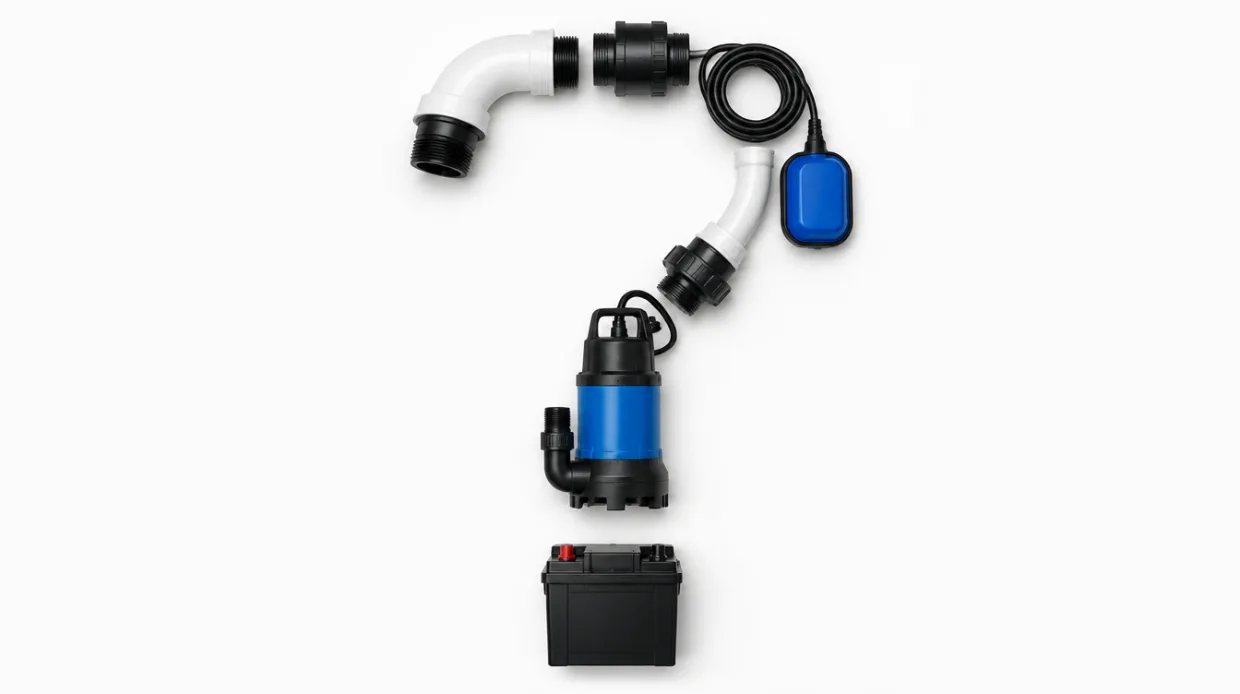
This is the definitive FAQ for our full sump pump installation content series, 15 of the most common questions Toronto homeowners ask, grouped into five themed sections and answered concisely enough for a quick read. Each answer links to a full deep-dive guide where one exists, so you can jump straight to the level of detail you need, whether that's a two-sentence answer or a complete breakdown.
Use this page as a hub: skim the section headers for the topic you're researching, read the short answer, and click through if you want the longer version. Between this FAQ and the linked guides, it covers everything from basic terminology through cost, permits, sizing, maintenance, and vetting a contractor.
Basics
1. What is sump pump installation?
Sump pump installation is the process of placing a mechanical pump into a basement sump pit to remove groundwater collected by weeping tile before it can flood the space. It includes the pit itself, the pump, a discharge line routed away from the foundation, and typically a check valve to prevent backflow. Our complete pillar guide covers every component of the system in detail.
2. Do I need a sump pump if I already have weeping tile?
Yes. Weeping tile collects groundwater around the foundation but has no way to move it out of the pit on its own, it simply relies on gravity to channel water there. Without a pump, that collected water sits until it overflows. See our full sump pump vs. weeping tile comparison for how the two systems work together.
3. What's the difference between a submersible and pedestal pump?
A submersible pump sits fully inside the pit, submerged in water, and is generally quieter with higher capacity for larger volumes. A pedestal pump keeps its motor mounted above the pit on a column, which makes it easier to service but usually noisier and less powerful. Most Toronto installations today use submersible pumps for finished or semi-finished basements.
4. How do I know if my current sump pump is failing?
Watch for unusual grinding or rattling noises, a pump that runs constantly or never activates at all, visible rust or corrosion, age beyond the typical 7-10 year service life, or a musty smell near the pit even when the pump seems to be operating. Our warning signs guide covers seven specific symptoms worth watching for.
Cost & Sizing
5. How much does sump pump installation cost in Toronto?
Cost depends on pump type, pit condition, discharge routing complexity, and whether battery backup is included, with permitted, properly sized installations generally landing in a predictable range that reflects the labour, materials, and permit fees involved. Our 2026 cost guide breaks down the specific factors that move a quote up or down.
6. What size sump pump do I need?
Correct sizing depends on your pit's capacity, expected water volume during heavy rain or snowmelt, and the discharge head the pump has to overcome to push water up and out. A contractor should measure these factors on-site rather than offering a standard size without ever visiting the property. Our sizing guide walks through the horsepower math in detail.
7. Is battery backup worth the extra cost?
For most Toronto homes, yes. Power outages during major storms are precisely when a sump pump is needed most, and a battery backup system keeps the pump running for hours during an outage that would otherwise leave the primary pump completely offline. Our battery backup deep-dive covers runtime expectations and system options.
Permits & Process
8. Do I need a permit for sump pump installation?
In most cases, yes. Sump pump installation is plumbing work that typically requires a permit in Toronto, and a contractor who suggests skipping it to save time is cutting a corner that can cause problems later with inspections, warranties, and insurance claims. Our permit and compliance guide explains exactly what's required and why.
9. How long does installation take?
A standard installation typically takes one day from initial assessment through final testing, though timelines can extend if the pit needs to be dug or enlarged, or if permit scheduling adds a delay before work can begin. Our step-by-step timeline guide breaks the full process into seven stages.
10. Where is my sump pump allowed to discharge?
Discharge routing has to comply with City of Toronto bylaw requirements covering storm sewer connections, dry well placement, and setback distances from property lines and neighbouring structures. A contractor should assess your specific property against these rules before work begins rather than defaulting to a generic answer.
Signs & Maintenance
11. What are the signs I need a sump pump?
Recurring basement dampness, a musty odor, visible water stains near the floor, a history of flooding during heavy rain, or a known high water table in your area are all worth having professionally assessed, even before the basement actually floods. Reviewing the full list of warning signs can help you catch a problem early.
12. How often should a sump pump be replaced?
Most sump pumps last 7-10 years under normal residential use, though heavy use, poor initial sizing, or general age-related wear can shorten that window considerably. Testing the pump annually, ideally before spring thaw, helps catch a failing unit before it stops working during a storm.
13. How do I test my sump pump is working?
Pour a bucket of water into the pit until the float switch triggers the pump, then confirm it activates, removes the water fully, and shuts off correctly once the pit is empty. This simple test takes just a few minutes and is worth repeating a few times a year, particularly ahead of spring thaw and heavy summer storms.
Contractors
14. What questions should I ask a contractor before hiring?
Ask whether they'll pull the required permit, how they'll determine discharge routing for your specific property, how they size the pump for your home, what the warranty covers in writing, and whether they can show examples of past sump pump installations. Our contractor vetting guide covers all five questions with right-answer and wrong-answer examples.
15. What should a sump pump warranty cover?
A proper warranty specifies workmanship coverage in writing, kept separate from the pump manufacturer's own equipment warranty, and clearly states what's covered, for how long, and what circumstances would void it. Vague verbal assurances without anything written down are a red flag worth pushing back on before signing a contract.
Still have a question we haven't covered? These 15 answers address the questions we hear most often, but every basement is different. A free on-site assessment gets you specific answers for your actual home rather than general guidance.
How This FAQ Fits Together With the Full Series
Each of these 15 answers is intentionally short enough to read in under a minute, but sump pump installation involves enough moving parts, permitting, discharge routing, pump sizing, backup power, maintenance, and contractor vetting, that no single short answer can fully cover any of them. That's the reason this page links out to nine dedicated guides rather than trying to cram everything into one long document.
If you're just starting to research sump pump installation for your Toronto home, a practical path through this material is to start with the basics section above, then read the pillar guide for full context on how the system works end to end. From there, jump to whichever specific concern matches your situation, cost if you're budgeting, permits if you're evaluating a contractor's quote, or sizing if you already know you need a pump and want to understand what "correctly sized" actually means for your home.
Homeowners who already have a sump pump installed and are troubleshooting an existing problem will generally get more value starting with the signs and maintenance section, since those questions are aimed specifically at recognizing failure before it causes damage, rather than planning a new installation from scratch.
Get Your Specific Questions Answered
General answers are useful for getting oriented, but the right pump size, discharge route, and installation timeline for your home depend on details a written FAQ can't account for, your pit's actual dimensions, your property's specific discharge options, and the condition of your existing weeping tile if you have it. If you've read through this FAQ and still have questions specific to your basement, get your questions answered with a free assessment rather than guessing based on general information alone. BaseWorks evaluates every property on-site before recommending a specific pump, discharge route, or timeline, using the same permitted, properly sized approach covered throughout this series.
An on-site assessment typically takes less than an hour and gives you a written quote covering permit handling, pump sizing based on actual pit measurements, and a discharge plan specific to your property, the same standard every guide in this series has walked through. There's no obligation to proceed after the assessment, and having a professional evaluation in hand makes it far easier to compare against any other quotes you're considering, using the exact vetting questions covered earlier in this FAQ.