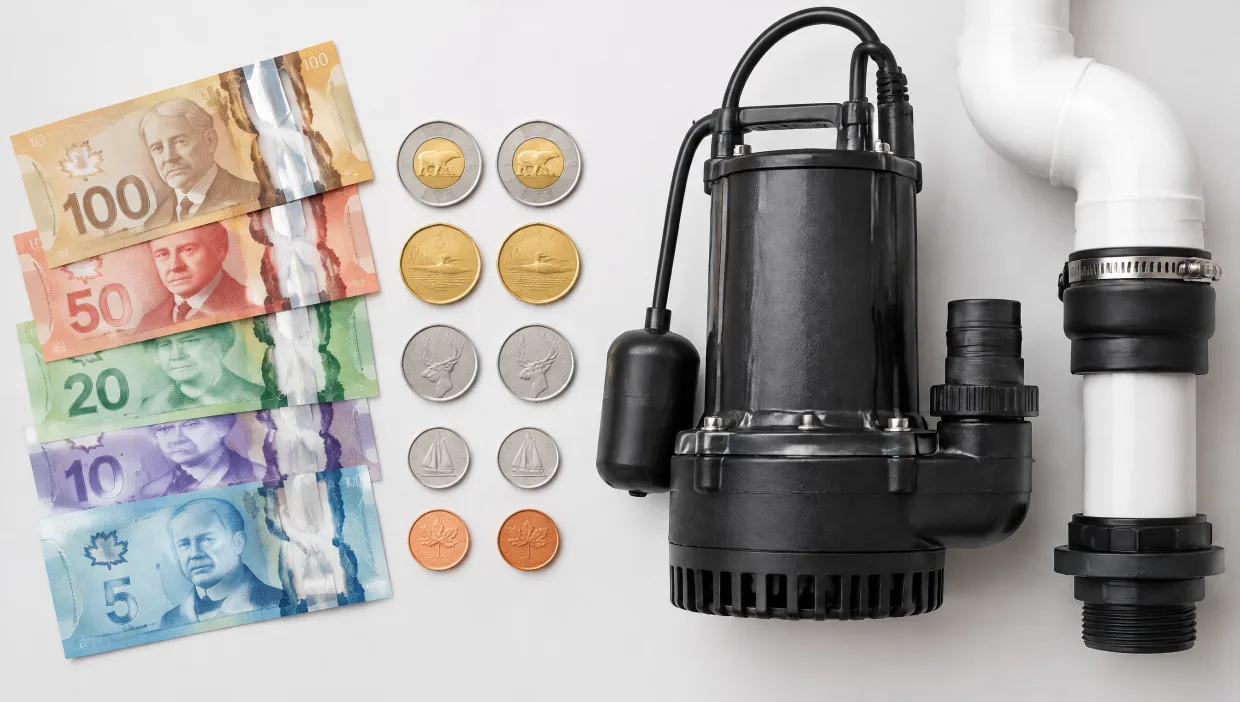
Standard sump pump installation in Toronto runs $1,500 to $4,000, covering the pit, pump, float switch, and discharge line. Battery backup and new pit excavation are common add-ons that shift the total higher depending on your home's specific conditions. This guide breaks down where that range comes from and what actually drives your final price up or down.
Pricing for structural and drainage work like this is notoriously inconsistent across contractors, partly because the underlying scope varies so much project to project. A quote that looks unusually low or high often reflects a real difference in what's actually included, permit handling, discharge routing complexity, pump sizing, rather than one contractor simply being cheaper or more expensive across the board. Understanding the individual cost components below makes it much easier to compare two quotes that look completely different on the surface, and to spot when a low number is missing something important rather than genuinely representing a better deal.
Base Installation Cost: $1,500-$4,000
This range covers a standard submersible pump installation into an existing or newly formed pit, including the float switch and a properly routed discharge line. Where a specific project lands within that range depends mostly on pump horsepower, discharge routing complexity, and whether permit and inspection work is required. BaseWorks provides a fixed-price written quote after a free, on-site assessment rather than a phone estimate.
Battery Backup System: +$800-$1,500
A battery backup unit activates automatically when the primary pump fails or loses power, running 8 to 12 hours on a full charge. This matters more in Toronto than in many other climates, since the city's most significant basement flooding events, summer thunderstorms and spring melt, are exactly when power outages are most likely. It's worth understanding how the full sump pump system works together before deciding whether backup power makes sense for your specific home.
New Pit Excavation: +$500-$1,500
If no existing pit is present, the basement floor needs to be cut and formed to create one. This adds concrete work on top of the standard installation, and is one of the more significant cost swings between one project and another, since it depends entirely on whether a home already has a functioning pit from a prior renovation or original construction.
What Drives Cost Up or Down
- Pump horsepower needed - homes with high water tables or heavy clay soil often require a larger, more expensive pump
- Discharge routing complexity - a straightforward run to an existing storm connection costs less than routing to grade with additional trenching
- Permit and inspection requirements - required for any installation connected to a sewer discharge system, adding administrative time to the project
- Accessibility of the install location - a finished basement with limited access to the ideal pit location can add labour time
- Electrical work needed - a dedicated circuit or GFCI outlet near the pit may need to be added if one doesn't already exist
- Existing pit condition - a cracked, undersized, or improperly sealed existing pit may need replacement rather than reuse, adding to the scope
None of these factors are hidden or unusual, they're simply variables that a phone quote can't account for without an actual look at the property. This is why every serious quote in this category should follow an on-site assessment rather than a number given sight unseen.
Submersible vs. Pedestal Pump Pricing
Pedestal pumps are typically cheaper upfront since the motor sits above the pit rather than being sealed for submersion. However, they're less commonly installed in finished basements due to noise, and most Toronto homeowners renovating or protecting a livable lower level end up choosing the submersible option despite the modest cost premium.
The price gap between the two pump types is usually smaller than homeowners expect, often a few hundred dollars rather than a dramatic swing, since labour and discharge line routing make up a larger share of total project cost than the pump unit itself. Choosing based on long-term noise tolerance and basement usage tends to matter more than chasing the lowest possible unit price.
Ongoing Costs Beyond Installation
The installation price is only part of the total cost of ownership. Electricity to run the pump is minimal under normal conditions since it only activates when triggered, but homes with a persistently high water table may see it cycle more frequently. Battery replacement for a backup system, typically every 3 to 5 years, is a modest recurring cost worth budgeting for once a backup unit is in place. And eventual pump replacement, expected every 7 to 10 years for a submersible unit under normal use, should be planned for as a predictable future expense rather than a surprise when the original unit eventually wears out.
None of these ongoing costs come close to the upfront installation price, but factoring them in gives a more complete, realistic picture of total ownership cost than looking at the initial installation quote alone.
Is a Cheap Sump Pump Installation Worth the Risk?
An unusually low quote is worth questioning closely. Undersized pumps, skipped permits, or improperly routed discharge lines, sending water somewhere the City bylaw doesn't actually allow, can violate local rules and, more importantly, fail during the exact storm events they're meant to handle. The cost difference between a corner-cutting installation and a properly permitted one is small relative to the cost of a flooded, finished basement.
A common pattern with underpriced installations is a pump sized for the cheapest available unit rather than the home's actual water volume. It may run fine during light rain and pass a quick test, then fail entirely during the kind of sudden, high-volume groundwater event that only shows up once or twice a year, exactly when the system is actually being relied on. By the time that gap becomes visible, the homeowner has already paid for an installation that never protected the home under the conditions it was meant for.
Skipped permits carry their own separate risk beyond performance. An unpermitted discharge connection can result in fines, forced correction at the homeowner's expense, and complications during a future home sale when a buyer's inspector or lawyer asks for permit documentation that doesn't exist. What looks like savings upfront often becomes a more expensive problem later, either through a failed system during an actual flood or through the paperwork gap surfacing at the worst possible time.
The real comparison isn't installation cost vs. no installation cost. It's a $1,500-$4,000 upfront investment against the cost of flood remediation, damaged flooring and drywall, and lost belongings in a basement that floods without one.
How This Compares to Full Waterproofing Costs
Sump pump installation is often confused with full basement waterproofing, which is a larger scope covering membrane, weeping tile, and drainage work around the entire foundation. Our basement waterproofing service typically represents a bigger investment than a standalone sump pump install, since it addresses the whole foundation rather than one point of removal. Many homeowners start with a sump pump as the more affordable first step, then add full waterproofing later if ongoing dampness signals a broader issue than the pump alone can resolve. Others need both from the outset once an assessment reveals the actual scope of the problem.
Getting an Accurate Quote for Your Home
Because pump sizing, discharge routing, and pit condition all vary by property, a phone estimate is rarely accurate. An on-site assessment lets a contractor confirm pit capacity, measure discharge head, and check whether the existing setup, if any, meets current bylaw requirements before a single number goes on paper. BaseWorks provides a fixed, written quote after this assessment rather than a rough phone range, so what you're approving reflects your home's actual conditions rather than a generic estimate that may shift once work begins.
Booking that assessment costs nothing and carries no obligation, which makes it a genuinely low-friction first step even for homeowners who are still deciding whether a sump pump is the right investment for their specific home right now.
Frequently Asked Questions
Most standard homeowner's policies don't cover the upfront cost of installing a sump pump, though some insurers offer sump pump failure coverage or premium discounts once one is installed. Check with your specific insurer, since policies vary.
For most Toronto homes, yes. The $800-$1,500 additional cost is generally far less than the cost of flood remediation and finished basement repair, and Toronto's worst flooding events are frequently tied to the same storms that cause power outages.
Basic annual testing is a task homeowners can do themselves at no cost. A professional inspection, when scheduled, is typically a modest service call fee rather than a major expense, especially compared to emergency repair after a failure.
Only if no existing pit is present. Homes with an existing pit in reasonable condition can often have their pump and discharge line replaced or upgraded without the added $500-$1,500 excavation and concrete cost.