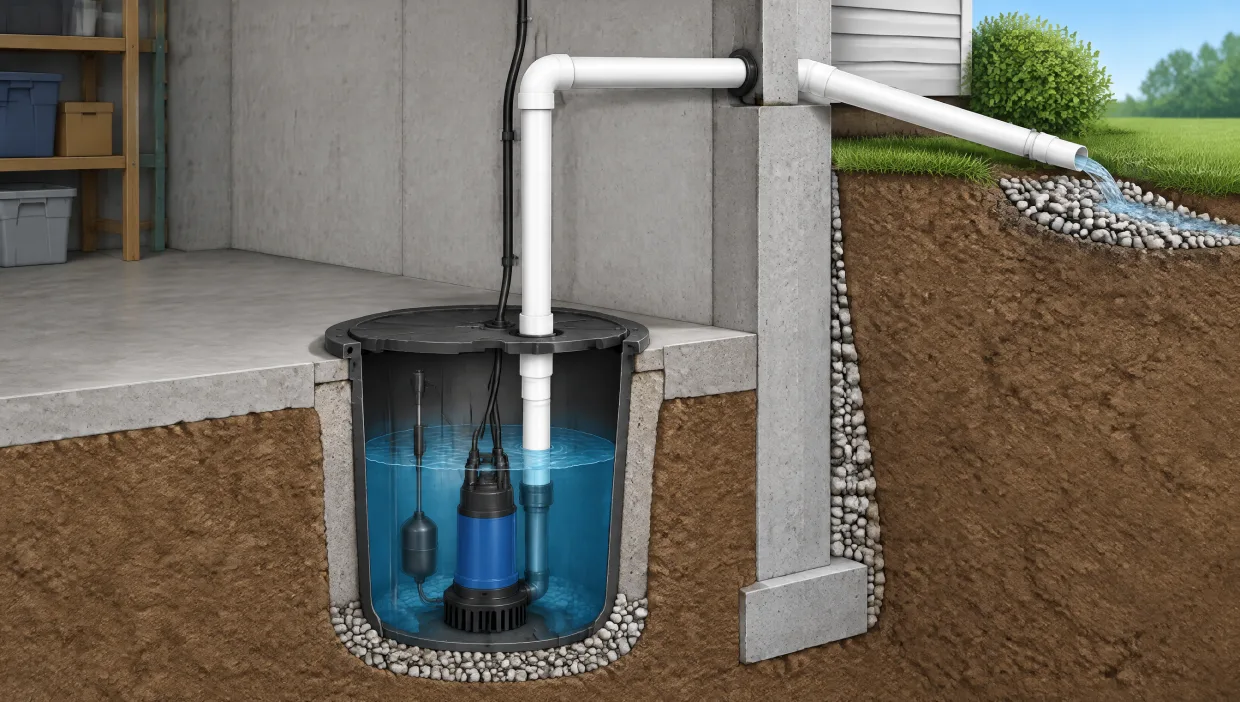
Sump pump installation in Toronto is the process of installing a pit, pump, float switch, and discharge line system that actively removes groundwater before it can flood a basement. It's one of the most effective and affordable ways to protect a Toronto home against the clay soil and seasonal groundwater swings that make basement flooding a real risk across the city.
This guide walks through exactly how the system works, when a home actually needs one, what a professional installation covers, and why Toronto's specific soil and weather conditions make this one of the more overlooked but genuinely worthwhile protections a homeowner can add. If you already know you need one and just want pricing, our 2026 sump pump installation cost guide breaks that down directly.
How a Sump Pump System Works
A sump pit, typically a plastic liner set into the lowest point of the basement floor, collects groundwater that seeps in around the foundation. A float switch inside the pit rises with the water level and automatically triggers the submersible pump once it reaches a set threshold. The pump then pushes that water through a discharge line, out of the home, and away from the foundation, keeping the basement dry without any manual intervention.
Sump Pump vs. Basement Waterproofing: How They Work Together
Basement waterproofing and sump pump installation aren't competing solutions, they're complementary layers of the same protection system. Waterproofing membranes and sealants keep water from penetrating the foundation walls and floor in the first place. A sump pump handles the water that does collect around the foundation, particularly water directed there intentionally by a weeping tile system. A basement without a sump pump but with weeping tile has no way to actually remove the water the weeping tile channels toward it, and a sump pump without any waterproofing or drainage feeding it is only addressing part of the picture.
Signs You Need a Sump Pump
- No existing pump in a basement that has shown any dampness or past water intrusion
- Frequent basement dampness or a musty smell after heavy rain, even without visible pooling
- A high water table in your specific neighbourhood, common across several Toronto areas with heavier clay soil
- A recent flooding event, which is the single strongest predictor that another one is possible under similar conditions
- An aging or undersized existing pump, particularly one installed more than 7-10 years ago or one that seems to run more often than it used to
- A finished basement or valuable storage in the lower level, which raises the real cost of an unmanaged water event considerably
None of these signs alone guarantees a basement will flood without intervention, but taken together they're the same pattern our team sees repeatedly across Toronto homes that eventually do experience water intrusion. A free assessment is the fastest way to move from guessing to knowing exactly where a specific home stands.
What a Professional Installation Includes
A proper installation starts with an on-site assessment of the pit condition (or where a new one needs to be cut and formed if none exists), the pump and float switch selected for the home's actual water volume, and a discharge line routed to a bylaw-compliant discharge point. Many installations also include a battery backup system, which keeps the pump running during a power outage, exactly the scenario when Toronto storms are most likely to cause flooding in the first place.
Discharge routing deserves particular attention, since the City of Toronto restricts where sump pump water is allowed to go. It cannot connect to the sanitary sewer system under any circumstances; acceptable options are the storm sewer, a dry well, or discharge to grade at least 3 meters from the foundation, directed away from the property. Any installation connected to a sewer discharge point also requires a City plumbing permit, which a licensed contractor pulls as part of the project rather than leaving it to the homeowner to sort out afterward.
Pump sizing is the other piece worth understanding upfront. A standard Toronto home with typical groundwater conditions is generally well served by a 1/3 to 1/2 horsepower submersible pump. Homes with a high water table, a larger catchment area, or particularly heavy clay soil composition may need a 3/4 to 1 horsepower pump to keep pace with incoming water during peak events. Sizing isn't something to guess at; it's calculated from the specific pit capacity, expected water volume, and discharge head, the vertical distance and pipe length the water actually needs to travel, at the assessment stage.
Submersible vs. Pedestal Pumps
Submersible Pumps
Sit fully inside the pit, sealed against water contact. Quieter, more common in modern installations, and generally the better fit for a finished or frequently-used basement.
Pedestal Pumps
The motor sits above the pit on a raised column, keeping it out of the water. Typically lower cost upfront, but louder and less discreet, usually better suited to an unfinished utility area.
Most homeowners we work with in finished or partially finished Toronto basements end up choosing submersible pumps once they understand the noise difference in practice, a pedestal pump's motor running above the waterline is audibly louder than a sealed submersible unit doing the same job below it. The trade-off is largely about long-term serviceability versus upfront cost rather than performance, since both pump types can be correctly sized to handle the same water volume when installed properly.
Why Toronto Homes Specifically Need Reliable Sump Pump Systems
Toronto's clay soil retains water rather than draining it away quickly, which means groundwater pressure against foundations builds up faster and stays elevated longer than it would in sandier soil conditions. Combined with sudden spring melt and summer storm surges, this creates exactly the kind of rapid, high-volume groundwater event that a well-sized, properly installed sump pump system is built to handle. This pattern shows up most clearly in Toronto's clay soil neighbourhoods, where heavier soil composition means groundwater has fewer places to drain naturally and instead pushes toward the path of least resistance, often the foundation wall of the nearest basement.
The core principle: a sump pump doesn't prevent water from reaching your foundation, it removes water that's already there before it can become a flood. That's why sizing, discharge routing, and backup power all matter as much as the pump itself.
Annual Maintenance and Testing
A sump pump system isn't a install-it-and-forget-it fixture. Annual testing, pouring a bucket of water into the pit and confirming the float switch triggers the pump and the discharge line clears the water, is the simplest way to catch a failing system before it's actually needed during a storm. Submersible pumps in normal operating conditions are generally good for 7 to 10 years, though Toronto's heavier groundwater loads during spring melt and summer storm season can shorten that window. A pump that runs continuously, makes unusual grinding or humming sounds, or fails to fully clear the pit during testing shouldn't wait for a scheduled replacement date.
It's worth building this testing habit into the same seasonal routine as other basic home maintenance, checking it each spring before storm season ramps up is a simple, low-effort way to avoid discovering a failed pump only after water is already on the floor.
A Real Toronto Scenario
A common pattern we see: a homeowner in a midtown Toronto neighbourhood with an older, undersized pump that had been quietly running near its limit for years without ever fully failing. During a summer thunderstorm that also knocked out power across the block, the pump stopped entirely, exactly when the groundwater volume was at its highest. Without a battery backup, there was nothing to bridge that gap. The basement flooded, not because the sump pump concept failed, but because the specific system in place wasn't sized or backed up for the exact conditions it was eventually tested against. A properly sized replacement with battery backup resolved it permanently.
Frequently Asked Questions
A French drain moves surface or groundwater away through a buried perforated pipe using gravity alone. A sump pump actively collects water in a pit and mechanically pumps it out, which is necessary when gravity alone can't move water far enough away from the foundation.
Yes. Power outages, mechanical wear after 7 to 10 years of service, a stuck float switch, or a pump sized too small for the home's water volume are the most common failure points. This is why battery backup and periodic testing matter.
Not every basement, but most benefit from one given Toronto's clay soil and seasonal groundwater swings. Homes with a history of dampness, a high water table, or a finished basement are the strongest candidates.
A sump pump moves clear groundwater from a pit to a storm discharge point. A sewage ejector pump handles wastewater from a below-grade bathroom or laundry area and discharges into the sanitary sewer system. They serve different purposes and are never interchangeable.