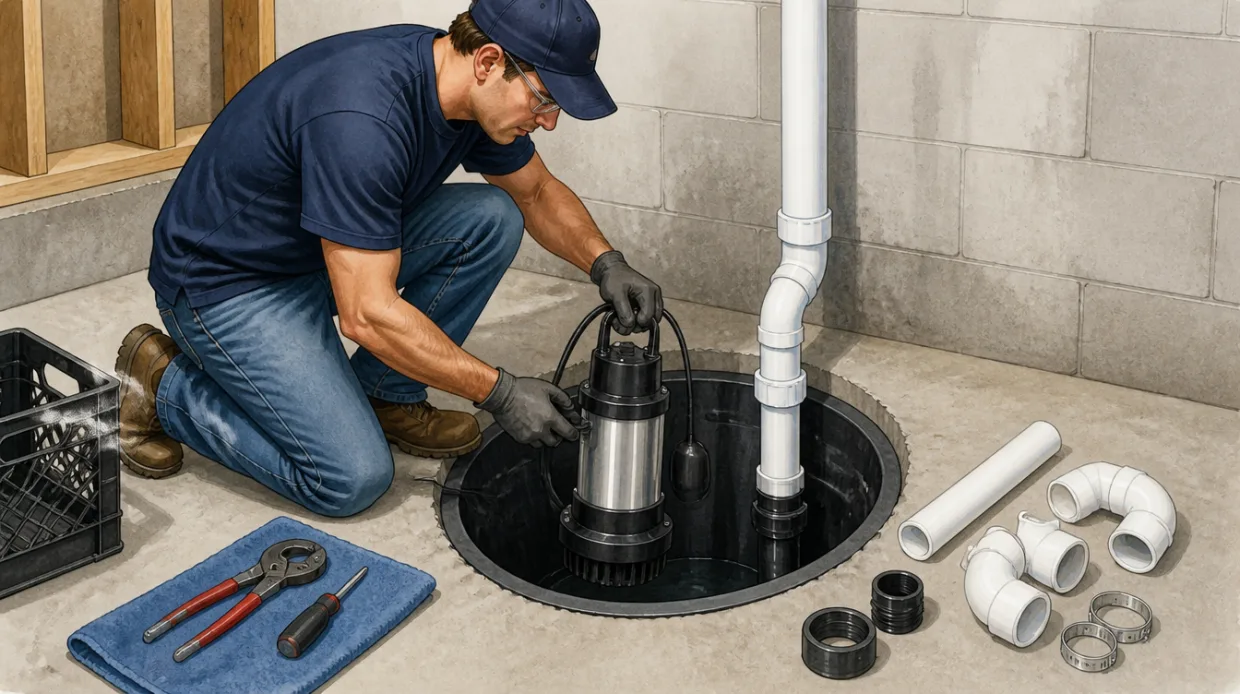
A straightforward sump pump installation into an existing pit can often be completed in a single day. Installs requiring a new pit to be excavated, or permit-dependent discharge routing that needs more extensive exterior work, take longer. This guide walks through each step of the process so you know what to expect and how to plan around it.
Knowing this timeline in advance matters most for homeowners trying to plan around it, coordinating time off work, arranging pet or family logistics around a contractor being in the basement for part of a day, or simply wanting a realistic sense of when protection will actually be in place before the next storm season. Vague promises of "we'll get it done quick" aren't especially useful for that kind of planning, which is why this breakdown covers each specific step and what it actually involves.
Step 1: Assessment and Quote
Every single project starts with an on-site evaluation of pit condition, water volume, and discharge options. This typically happens on a same-week scheduling basis and results in a fixed, written quote rather than a rough phone estimate. The assessment is also where pump sizing, discharge routing, and whether a permit is required all get confirmed before any work is scheduled.
This first step usually takes under an hour on-site, though the written quote itself may follow within a day or two afterward once the specific scope has been fully worked out. It's the one step in the whole process that happens before you've committed to anything, so there's no pressure to move forward immediately if you want time to compare options first.
Step 2: Permit Application (If Required)
Any installation connected to a sewer discharge system requires a City permit application filed before installation begins. This step runs in parallel with scheduling the installation crew, so it doesn't necessarily add its own separate delay to the overall project, but permit processing time is a real variable that affects how soon the actual physical work can start.
Step 3: Pit Preparation
If an existing pit is present and in good condition, it's cleaned and inspected for reuse. If no pit exists, this step involves excavating and forming a new one in the basement floor, cutting concrete, digging to the required depth, and pouring or setting the pit liner. This is the single biggest factor in how long an installation takes overall.
Cutting concrete alone can take a few hours depending on floor thickness and the size of the opening needed, and if the surrounding concrete needs to cure after the pit liner is set and backfilled, that curing time adds another delay before the rest of the installation can safely proceed. This is the main reason new-pit installations are commonly scheduled across two visits rather than completed start to finish in a single day.
Step 4: Pump and Float Switch Installation
The submersible pump is set into the pit, the float switch is calibrated to trigger at the correct water level, and all connections are tested for a secure fit. This step is typically quick once the pit itself is ready to receive the equipment. Float switch calibration matters more than it might seem, an improperly set trigger point can mean the pump activates too late, or cycles more often than necessary, so this isn't a step to rush through even though it's one of the faster parts of the overall process.
Step 5: Discharge Line Routing
The discharge line is run to the approved discharge point per bylaw, whether that's the storm sewer, a dry well, or discharge to grade. The complexity here depends heavily on distance and whether trenching through a finished yard or hardscaping is required.
A short run to a nearby storm sewer connection with clear, unobstructed ground to work through is generally the fastest version of this step. A longer route, one that has to navigate around existing landscaping, a driveway, or interlocking stone, takes considerably more time and may require restoration work afterward, patching grass, resetting pavers, or repairing any surface disturbed during trenching. This is worth discussing at the assessment stage so there are no surprises about what the yard will look like partway through the project.
Step 6: Battery Backup Installation (If Included)
When a battery backup system is part of the project scope, the secondary pump and battery unit are wired and tested alongside the primary system during the same visit. This adds a modest amount of time to the overall day but rarely extends the project into an additional visit on its own.
Step 7: Testing and Walkthrough
Water is poured into the pit to confirm the pump activates correctly, discharge flow is confirmed at the exit point, and the homeowner is walked through basic maintenance, annual testing, what to watch for, and when a professional inspection might be worth scheduling going forward. This final step is what actually confirms the system works as intended, not just that it was physically installed.
What Extends the Timeline
- New pit excavation, which adds concrete cutting, digging, and curing time compared to reusing an existing pit
- Permit processing time, which varies depending on City workload and the specific discharge scope
- Discharge routing requiring more extensive exterior work, such as longer trenching runs or hardscaping that needs to be removed and replaced
- Electrical work, if a dedicated circuit or GFCI outlet near the pit doesn't already exist and needs to be added before the pump can be wired in
- Winter ground conditions, which can slow exterior trenching work compared to installations scheduled during warmer months
None of these factors are unusual or a sign something's gone wrong, they're simply the normal variables that separate a same-day project from one that takes several days across scheduling and curing time. A contractor who's done a thorough assessment upfront should be able to flag which of these apply to your specific project before work begins, rather than discovering them partway through and extending the timeline unexpectedly.
Scheduling Around Storm Season
Given that permit processing and any required curing time can add days to a new-pit installation, timing matters. Scheduling an assessment and installation well ahead of peak storm season, rather than waiting until a major storm is forecast, gives the process room to work through normally rather than under pressure. Emergency same-day requests during an active storm are sometimes possible for urgent situations, but they don't allow for the same careful pit preparation, permit compliance, and testing that a properly scheduled installation does.
For homeowners who've recognized one or more of the warning signs covered in our guide on battery backup protection and related risk factors, booking the assessment now rather than during the next storm watch is the single most useful thing to do with this information.
What to Expect on Installation Day
The crew arrives with the equipment already selected based on the assessment, so there's no guesswork about pump size or discharge routing happening on the fly. Protective coverings are typically placed over the immediate work area to manage dust and debris, particularly relevant if pit excavation is involved. Existing basement storage or furniture near the work area is usually asked to be cleared beforehand, since that saves time compared to working around it.
Once the physical installation is complete, the testing and walkthrough step isn't rushed, this is the point where the homeowner gets a direct explanation of how the system works, what normal operation sounds and looks like, and what would indicate a problem down the line. Written documentation, including permit paperwork if applicable, is provided at this stage as well, giving you a complete record from day one rather than something to track down later.
The honest range: a straightforward pump replacement into an existing pit is often a single day. A new pit with permit-dependent discharge routing can extend the overall project timeline, including permit approval time, to one to two full weeks from initial assessment through to completion. Neither timeline is unusual, they just reflect genuinely different scopes of work.
Frequently Asked Questions
Yes, for straightforward installations into an existing pit with a simple discharge connection, the actual installation work is often completed in a single visit, typically within a day.
Not usually. Adding a battery backup during the same visit typically adds a modest amount of time for wiring and testing, rather than extending the project by an additional day.
This depends on permit requirements and scheduling availability, but straightforward projects without a permit-dependent discharge change can often be scheduled within the same week as the assessment.
For most of the project, yes, though the immediate work area around the pit will be inaccessible while excavation, pump setting, and testing are underway. A finished basement can generally continue being used elsewhere during the work.