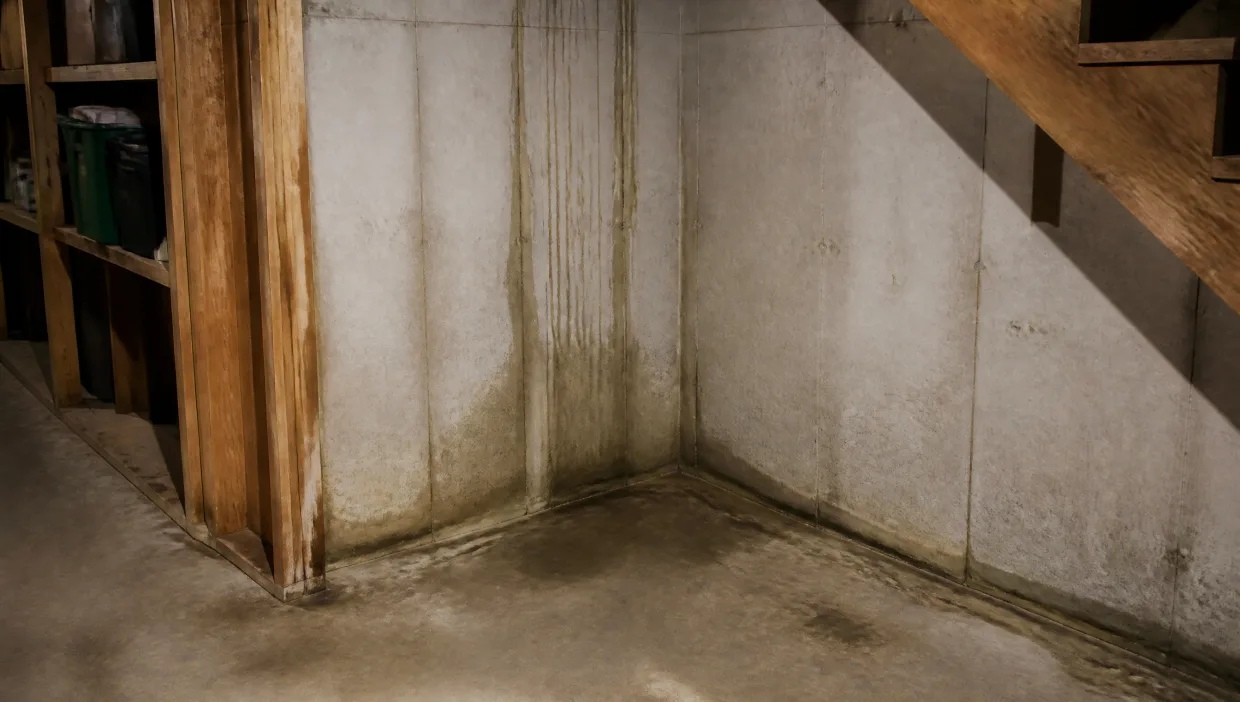
Many Toronto homeowners don't think about sump pump installation until after a flood. By then, the decision has already been made for them, and it usually costs far more in cleanup and repair than proactive installation would have. These 7 signs are worth taking seriously before that happens, not after.
None of these signs is dramatic on its own. That's actually part of what makes them easy to overlook, a slightly damp corner, a pump that's a bit older than you remember installing it, a neighbour mentioning their basement took on water last spring. Individually, each one is easy to explain away. Together, they form a pattern our team sees consistently in homes that end up dealing with an actual flood, and recognizing that pattern early is the entire point of this guide.
1. Your Basement Has Flooded Before
Past flooding is generally the single strongest predictor of future flooding under similar conditions. If your basement has taken on water even once, whether from a heavy storm, spring melt, or a slow seep that eventually pooled, the underlying groundwater conditions that caused it haven't gone away just because the water dried up. Whatever combination of soil, grading, and drainage let that water in the first time is still there, waiting for the next storm that matches or exceeds the one that caused the original flood.
2. You Notice Dampness or Musty Odours After Heavy Rain
This is often the earliest sign of groundwater intrusion, showing up well before any visible pooling. A musty smell that gets noticeably stronger after a storm, or a wall that feels cool and slightly damp to the touch, indicates moisture is already making its way toward the foundation even if nothing has flooded yet. This stage is actually the ideal time to act, since the problem is still manageable rather than already having caused visible damage.
3. Your Home Sits in a Low-Lying or High Water Table Area
Certain Toronto neighbourhoods, particularly those with heavier clay soil and lower elevation relative to surrounding streets, see this pattern more consistently than others. Clay soil retains groundwater rather than draining it away, which means homes built on it face more sustained pressure against the foundation during wet seasons than homes on sandier, better-draining soil. If you're unsure whether your specific street or block falls into this category, a contractor familiar with local conditions can usually tell you quickly based on soil type and known drainage patterns in the area.
4. You're Finishing or Have Finished Your Basement
Protecting a finished space, drywall, flooring, and whatever's stored down there, raises the real cost of an unmanaged water event considerably compared to an unfinished utility basement. If you're planning a finish-out or already living with one, this is one of the clearest reasons to have water management sorted out first rather than after the fact. Retrofitting a sump pump into an already-finished basement is entirely possible, but it's more disruptive than installing one before drywall and flooring go in, which is worth factoring into your renovation timeline if you're planning both.
5. Your Existing Pump Is Aging or Undersized
Pumps installed more than 7 to 10 years ago are approaching or past their typical service life. A pump sized for a smaller catchment area than your home actually has, sometimes installed generically rather than based on an actual assessment, may also be running near its limit without ever fully failing, until the one storm that finally exceeds it. Our 2026 sump pump cost guide breaks down what replacing or upgrading an existing system typically runs, which is useful context if this sign applies to your home.
A simple annual test, pouring water into the pit and watching how quickly and completely the pump clears it, is the easiest way to catch a pump that's starting to struggle before it fails outright. A pump that runs longer than it used to, cycles more frequently, or makes new grinding or humming sounds is telling you something worth listening to.
6. Neighbouring Homes Have Reported Flooding
Shared groundwater and municipal drainage conditions often affect a whole block or neighbourhood similarly, since the underlying soil composition and water table don't stop at a property line. If neighbours nearby have dealt with basement flooding, it's a reasonable signal that your home may face the same underlying risk even if it hasn't shown up yet. Municipal storm sewer capacity, street grading, and surrounding development can all affect how quickly and how badly a whole block floods during a heavy rain event, and these underlying factors tend to apply fairly evenly across neighbouring properties.
This is also a useful signal to gather informally and worth taking seriously. If you're new to a neighbourhood, or considering a home purchase, asking neighbours or checking local community forums for mentions of past flooding can surface information that isn't always obvious from looking at a property alone.
7. You've Had Power Outages During Storms Before
Without battery backup, a power outage during a storm is exactly when a sump pump is needed most and least likely to be running. Toronto's most significant flooding events are frequently tied to the same severe summer thunderstorms and rapid spring melt conditions that also knock out power across a neighbourhood, which means this specific failure mode isn't a rare edge case, it's a genuinely predictable pattern worth planning around directly.
If your home has a history of losing power during severe weather, and you don't currently have a battery backup system installed, this is one of the more directly actionable signs on this entire list. Battery backup units are a relatively modest add-on to a standard installation, and they specifically close the exact gap that causes some of the worst basement flooding scenarios, a pump that would have worked fine, but simply had no power to run on when it mattered most.
None of these signs alone guarantees a flood is coming. But two or three together, especially past flooding combined with an aging pump or no backup power, is the same pattern we see repeatedly in homes that eventually do experience water intrusion. Recognizing that combination early is worth far more than waiting for a single dramatic warning sign that may never arrive before the actual flood does.
What to Do If You Recognize These Signs
The most useful next step is understanding exactly how a sump pump system actually works and what a proper installation involves, so you know what questions to ask and what a fair assessment should cover. From there, the fastest way to move from guessing to knowing is to book a free assessment rather than waiting for the next storm season to find out the hard way. There's no cost or obligation to have someone actually look at your specific basement, pit condition, and water volume before deciding anything.
An assessment typically takes less than an hour and covers the specific conditions of your home rather than generic assumptions based on neighbourhood or home age alone. A contractor will look at existing pit condition if one is present, check for visible dampness or staining, and ask about your home's flooding or power outage history to build an accurate, complete picture of actual risk specific to your property. From there, you'll get a specific recommendation and a fixed, written quote rather than a vague estimate that could shift once work actually begins.
Waiting isn't free, even when nothing visibly changes in the meantime. Every wet season that passes without addressing an identified risk is another chance for the underlying conditions to catch up with a storm large enough to actually cause damage. Scheduling an assessment now, well before the next major rain event, means any recommended work can happen on a normal timeline rather than as an emergency repair after water is already on the floor and belongings are already being pulled out of a flooded basement.
Frequently Asked Questions
Yes, and this is the preferred approach. Installing proactively based on risk factors, rather than reactively after a flood, avoids the cost and disruption of water damage remediation entirely.
Not every basement, but most benefit from one given the city's clay soil and seasonal groundwater swings. Homes with none of the seven signs above are lower risk, but an assessment is the only way to know for certain.
The most common outcome is a basement flood during an unusually heavy storm or fast spring melt, often with damage to flooring, drywall, and stored belongings that costs far more to repair than a sump pump would have cost to install.
It depends on how many signs apply and how severe they are, but there's no reason to wait for the next major storm to find out. A free assessment can clarify urgency for your specific situation within days, not months.