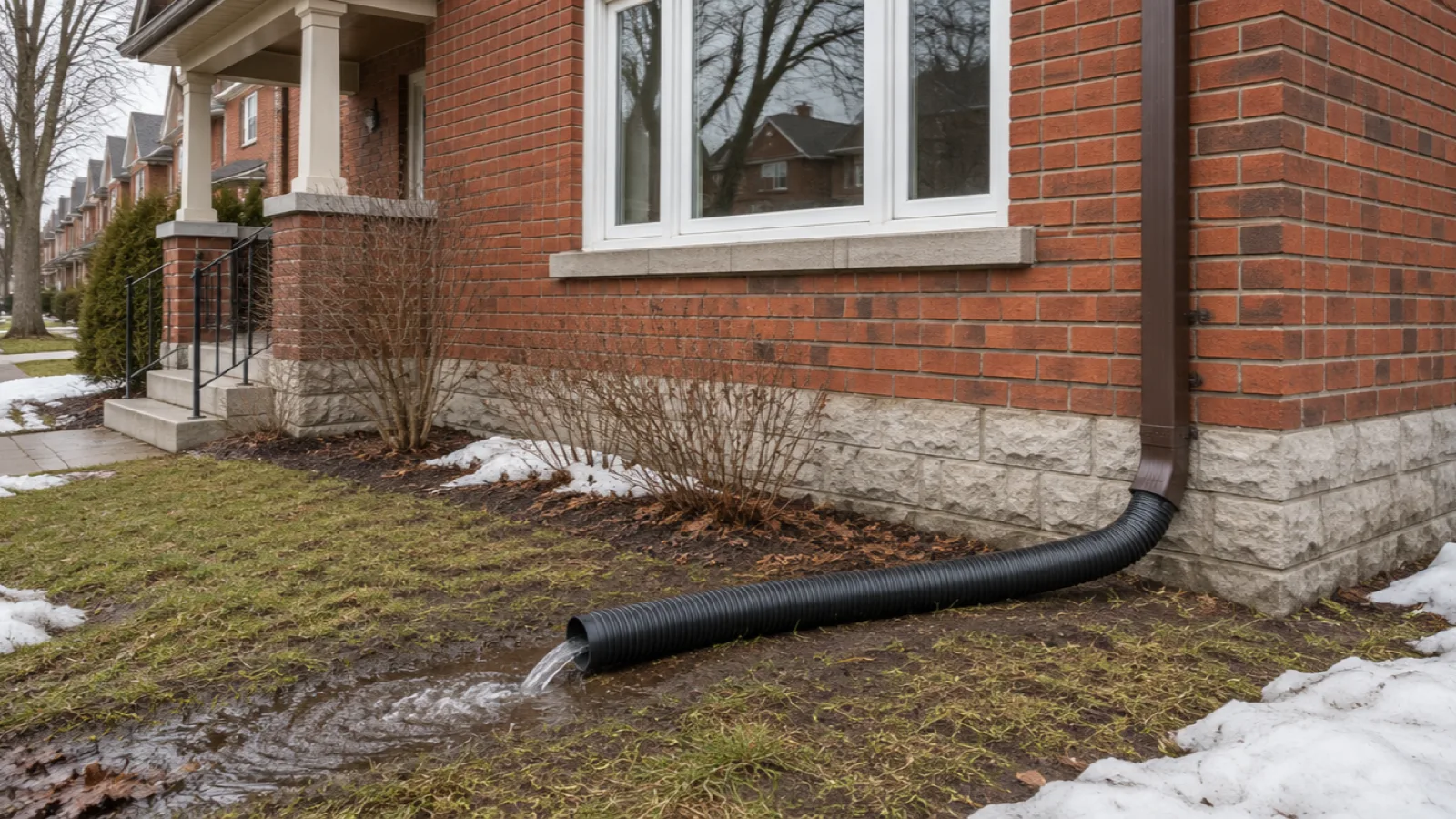
Late winter is a good moment to look over the outside of your house, because the snow that has piled up for months is about to turn into water. Where that water goes depends on a handful of everyday things: your gutters, your downspouts, the ground around the foundation, your sump pump and your window wells. This guide gives you a plain checklist you can work through before the thaw, plus a short list of when to stop and call someone who does basement waterproofing for a living.
Quick answer: before the thaw, make sure roof water is carried away from the house, the ground beside the foundation does not hold water against the wall, the sump pump runs when it should, and the window wells are clear. During the thaw, watch for damp spots and changes. If anything looks wrong, or if the job involves ladders, electricity or standing water, bring in a licensed professional. This article is educational and general.
Why the Spring Thaw Tests Your Basement
Snow and frozen ground change how water behaves. While the ground is frozen, melt water can run across the surface instead of soaking in, and it tends to follow the slope of the land. If that slope leads toward your house, or if a downspout empties beside the wall, the water ends up where you least want it.
None of that means every house will leak. It means the thaw is the time when small outdoor problems show up as indoor ones. The City of Toronto lists overflowing eavestroughs, leaking or blocked downspouts and poor lot grading among the causes of water seeping into basements, and says homeowners are responsible for their own private drains, foundation walls and lot drainage. You can read the City of Toronto basement flooding page for its current information.
A Note on Safety Before You Start
Some steps involve risk, so look and note rather than take chances.
- If you are not comfortable on a ladder, or the roof edge is icy, skip the gutter work and hire a professional.
- Never touch the sump pump, its cord or any outlet while standing in water. A licensed electrician should handle any wiring question.
- If you do not understand your plumbing, a licensed plumber can assess it for you.
The Pre-Thaw Checklist
Print this section or copy it into your notes, and tick each box as you go. Walk the outside of the house first, then the inside.
1. Gutters and Downspouts
- [ ] Look at the gutters from the ground. Do you see sagging sections, gaps at the joints or debris poking out?
- [ ] Check that water can actually flow through each downspout, and that nothing is blocking the outlet at the bottom.
- [ ] Look for ice built up at the downspout outlets, since a frozen outlet can send melt water over the side and down the wall.
- [ ] Make sure each downspout discharges onto the ground away from the foundation, not right beside it.
- [ ] Note any leaks, loose brackets or damage, and have them repaired by a professional if they sit above ground level.
Gutters collect a great deal of roof water, and all of it has to go somewhere. A downspout that empties against the wall puts that water right at the foundation. The City also notes that disconnecting downspouts from the sewer is mandatory in Toronto, so check the City page or ask a licensed plumber if you are unsure how yours is set up.
2. Grading and Drainage Around the House
- [ ] Walk the full perimeter and look at which way the ground slopes. It should lead water away from the house, not toward it.
- [ ] Look for low spots, dips or pooling beside the foundation where melt water could collect.
- [ ] Check whether soil, mulch or landscaping has settled against the wall in a way that holds water.
- [ ] Look at patios, steps, walkways and driveways beside the house. Do they tilt toward the wall?
- [ ] Take photos of anything unusual so you can compare after the thaw.
After a thaw day, go back and look for water sitting in the same spots.
3. Sump Pump Test
- [ ] Find the pump and see that the pit cover is on and the area around it is clear.
- [ ] Confirm the pump is plugged in to an outlet that is working, without handling anything if the floor is wet.
- [ ] With dry hands and a dry floor, pour a little water into the pit and watch that the pump starts, empties it and shuts off.
- [ ] Listen for grinding, rattling or a pump that runs without moving water.
- [ ] Go outside and see that water from the discharge pipe leaves the house and does not pool beside it or freeze at the outlet.
If the pump does not start or you have any doubt about the electrical side, stop and call a licensed electrician or plumber. Our guide to sump pump sizing explains how a professional approaches the question of which pump suits a house, and our sump pump installation page describes that service. If you rely on a pump during storms, our guide to a battery backup sump pump covers one option to ask about before the season starts.
4. Window Wells
- [ ] Clear leaves, snow, ice and debris out of each window well.
- [ ] Look at the bottom of the well for standing water or soil that has built up.
- [ ] Check the window, frame and seal inside for stains, damp or drafts.
- [ ] Make sure the cover, if you have one, is in good shape and not channelling water into the well.
A window well that fills with melt water puts water right against the glass. If a well is badly built, cracked or keeps filling, window well installation or repair may be the right answer, and a professional can look at how it drains.
5. Inside the Basement
- [ ] Look along the base of the walls and floor for stains, white mineral deposits or flaking paint.
- [ ] Check floor drains, and make sure nothing is stored where a leak would damage it.
- [ ] Move valuables and boxes up off the floor if you have had water before.
- [ ] Note any musty smells and look at the foundation walls for cracks.
Our guide to basement waterproofing methods compared shows how professionals approach different causes of water.
What to Watch During the Thaw
Once the melt begins, use short, regular checks instead of waiting for a problem.
- Outside, in daylight. Watch where melt water runs along the ground and whether it heads toward the foundation or pools beside it.
- Downspouts. See that they flow and that the water moves off, not back toward the wall.
- Window wells. Look in after heavy melt for water or ice.
- Sump pump. Note how often it runs, and whether it sounds the same as usual. Tell a professional if it runs constantly or stops.
- Inside. Look at wall bases and corners for damp patches, new stains or drips, and note any change in smell.
When to Call a Professional
A checklist finds symptoms. It cannot always explain causes, and some causes sit below ground or inside a wall. Call a professional if:
- Water has come in before, or returns after storms and melts.
- You see new or growing cracks, or wall movement.
- Damp patches, white mineral deposits or a musty smell keep coming back.
- The sump pump fails, runs constantly or sounds wrong.
- A window well keeps filling or leaks around the window.
- The job needs a ladder on an icy roof edge, work with electricity, or standing in water.
Pick the right person. A licensed electrician handles wiring and power, a licensed plumber handles drains and discharge piping, and a waterproofing contractor looks at how water reaches your foundation. If a crack or movement worries you, a licensed structural engineer should assess it. For the outside of the wall, our page on exterior waterproofing and our new guide to exterior waterproofing membrane types explain what excavation based work involves. From the inside, see interior waterproofing.
If you are planning a basement project, timing also matters. Our post on the timing basement waterproofing in Toronto covers how the seasons affect scheduling. If you are also thinking about more ceiling height, our page on basement underpinning Toronto explains that service.
How BaseWorks Helps
We offer a free in-person assessment so you can talk through your basement and your options with someone who does this work. We put the scope in writing. Call (437) 291-7723 or use our contact page to arrange a visit.
This article is educational and general. It is not engineering advice, and it does not replace advice from a licensed electrician, plumber or engineer.
Frequently Asked Questions
Start in late winter, before the snow begins to melt in earnest, so you can still reach gutters, downspouts, window wells and the ground beside the house. Doing the walk-through early leaves time to book a professional if you find something you cannot or should not fix yourself.
Many homeowners check that the pump is plugged in and that water leaves the pit and the discharge pipe when the pit is filled with a little water. If the pump will not start, makes unusual noises or you are unsure about the wiring, call a licensed electrician or plumber rather than working on it.
Put safety first. Water near electrical outlets, panels or appliances can be dangerous, so keep clear and ask a licensed electrician before shutting off or restoring power. Take photos, move belongings if it is safe, and call a waterproofing contractor to find out where the water is entering.
They help, because they control where roof water goes, but they do not solve every cause. Poor grading, foundation cracks, window wells, a failed sump pump or high groundwater can still let water in. If water keeps appearing after you tidy up outside, book an assessment.
Call when water returns after storms or melts, when you see new or widening cracks, damp patches, efflorescence or a musty smell, or when the sump pump runs constantly or fails. A professional can look at the whole system, which a checklist cannot do for you.