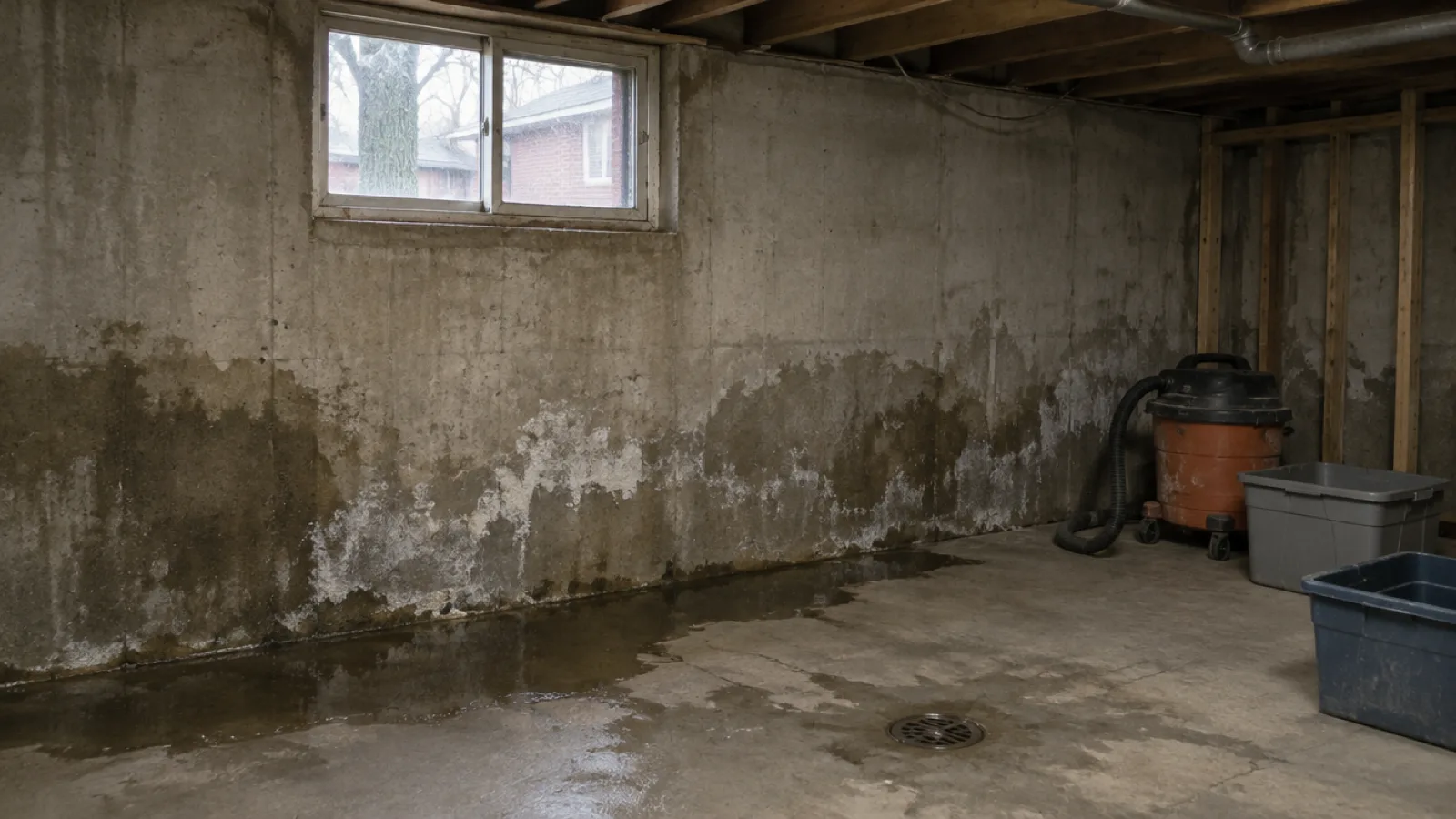
A wet basement in Toronto almost always has a specific cause, and the right repair depends on finding that cause first. Sealing a wall that leaks because of a short downspout, or digging up a foundation when the real problem is a plumbing line, spends money and leaves the water in place. This guide covers seven common causes, how to tell them apart and which fix usually matches each. When the cause is water pressure at the footing, the answer is usually a proper basement waterproofing system, but several causes are simpler and cheaper than that.
Quick answer: start outside, then inside. Check the grading, downspouts and window wells first, because they are the easiest causes to confirm and correct. Then look at where the water appears in the basement: at a crack, at the floor-wall joint, at a window or near a pipe. The location and the timing, such as after rain, during snowmelt or in dry weather, narrow the list quickly. A contractor or engineer should confirm the cause on site before any major work is chosen.
1. Window Wells That Fill and Leak
A window well is a hole in the ground next to the foundation, and it collects rain, snowmelt and debris. If it has no working drain, water rises against the window frame and finds its way in, often at the lower corners or through the seal between the frame and the concrete.
Signs include staining below the window, dampness on the sill and water that appears only after heavy rain. The first steps are cheap: clear leaves and soil, check that the well is not sitting full of water, and look at whether the cover is cracked or missing. A well that fills repeatedly may need a drain connected to the weeping tile, a deeper gravel base or a replacement. Our window well installation page explains how wells are replaced and drained.
2. Cracks in the Foundation Wall
Poured concrete and block walls crack for many reasons, and not every crack leaks. Fine vertical cracks are often caused by concrete curing and shrinking and may stay dry for years. Others let water through whenever the soil outside is saturated.
Where a crack is actively leaking and is not structural, a contractor can repair it from the inside, commonly by injecting a sealant that fills the crack. Where the wall itself is moving, the story is different. Horizontal cracks, stair-step cracks in block or brick, a wall that bows inward or a crack that keeps widening are reasons to call a licensed structural engineer before anyone seals anything. Sealing a moving crack hides a symptom of a larger problem. See our pages on foundation crack repair and basement crack repair for how these repairs are approached.
3. Water at the Floor-Wall Joint
The joint where the basement wall meets the floor slab is a common entry point, and it is typical of water pressure from the soil. When the ground around the footing is saturated, water pushes up through the gap between the slab and the wall. That is why the wet line often runs along the base of the wall after a long rain or during spring thaw.
Because the water is arriving from below and beside the slab, a surface coating usually does not hold against it. The usual repair is an interior drainage channel along the wall base that collects the water and carries it to a sump pit, where a pump discharges it. Our interior waterproofing page describes this approach, and the guide to basement waterproofing methods in Toronto compares it with exterior options.
4. A Failed or Clogged Weeping Tile
Weeping tile is the perforated drain pipe that runs around the footing and carries groundwater away from the foundation. In older Toronto homes it may be clay tile, and over decades it can silt up, crush, shift or fail where sections join. When it stops working, groundwater builds up around the footing and the basement becomes the lowest place for it to go.
The signs overlap with the floor-wall joint: dampness after rain, water along the base of the wall and a sump pit that runs often or never. A camera inspection by a plumber or drainage contractor can show whether the tile is clear. Replacing the tile means excavation, which is why the decision between a new exterior drain and an interior system matters. Our weeping tile installation page covers the exterior option, and the comparison of sump pump versus weeping tile explains how the two work together.
5. Poor Grading and Short Downspouts
Grading is the slope of the ground around the house, and it should carry water away from the foundation. Over the years soil settles, gardens are built up against the wall and paths tilt toward the house. Downspouts that discharge beside the foundation add a large volume of roof water to the same spot.
This is the cause worth checking first because it is the cheapest to correct. Look for soil that slopes toward the house, flower beds that hold water against the wall, downspouts that end at the foundation or drain into a cracked pipe, and paving that tilts inward. Fixes include regrading, extending downspouts away from the wall and repairing paving. Before you change where a downspout discharges, check the City of Toronto rules on downspout drainage, because the city regulates where roof water may go.
6. A High Water Table
The water table is the level where the ground is saturated with groundwater. In some parts of Toronto, near creeks, ravines or low-lying streets, that level can rise above the basement floor in spring or after a long wet period. When it does, water can seep through the slab, the joint and the walls at once.
A high water table is different from a surface water problem, because no amount of regrading removes it. The usual response is a drainage system with a sump pump, so the water that reaches the footing is collected and pumped out, rather than allowed to rise. If the problem is persistent or severe, a licensed engineer can advise on the site conditions. Ask any contractor how the system works during a power outage, and read our guide on basement sealing versus waterproofing to see why sealants alone do not hold back groundwater.
7. Plumbing Leaks and Sewer Backup
Not every wet basement is a foundation problem. A leaking supply line, a failed washing machine hose, a water heater leak, a dripping condensate line or a slow drain can all put water on the floor in dry weather. Humid air can also form condensation on cold pipes and walls in summer, which looks like a leak but is not.
The timing is the clue. Water that appears only after rain points outside. Water that appears in dry weather, near a pipe or fixture, or that returns on a regular schedule points to plumbing, and a licensed plumber is the right first call. A sewer backup is different again. Floor drain water that smells of sewage may contain contaminants, so avoid contact and call a plumber. The City of Toronto publishes information on basement flooding protection and may offer subsidy programs, so check its website for what is currently available.
The Seven Causes and Their Usual Fixes at a Glance
| Cause | Where you see it | Usual fix |
|---|---|---|
| Window well | Staining or water below the window, after rain | Clear, repair or replace the well and connect a drain |
| Foundation crack | Wet line along a crack in the wall | Inside repair if non-structural, engineer first if the wall is moving |
| Floor-wall joint | Water along the base of the wall after long rain or thaw | Interior drainage channel and sump pump |
| Failed weeping tile | Damp base of wall, busy or silent sump pit | Camera inspection, then drain repair or replacement |
| Grading and downspouts | Water after rain, soil sloping toward the house | Regrade and extend downspouts |
| High water table | Seepage in several places in spring or after wet spells | Drainage system with a sump pump, engineer advice if severe |
| Plumbing | Water in dry weather, near pipes or fixtures | Licensed plumber |
How to Narrow Down the Cause Before You Call
You can gather useful information in an afternoon, and it makes any site visit more productive. Work through these steps and write down what you find.
- Note the timing. Does the water appear after rain, during snowmelt, or in dry weather? Rain points outside and dry weather points to plumbing.
- Walk the outside. Look at the ground slope, the downspouts, the window wells and any paving that tilts toward the wall.
- Mark the location. Is the water at a window, a crack, the floor-wall joint, a corner or near a pipe?
- Try the plastic test. Tape plastic wrap to the wall for a day or two to separate condensation from leaking.
- Take photographs. Record the dampness, staining and any cracks, with the date, so changes are visible.
- Check the sump pit. If you have one, note whether it fills, how often the pump runs and whether it has a backup.
Our guide to the signs you need basement waterproofing in Toronto lists the warning signs that suggest the problem is more than a surface issue.
Who to Call and What to Ask
The right professional depends on the cause. A licensed plumber handles supply leaks, drains and sewer backups. A waterproofing contractor handles water entering through the foundation. A licensed structural engineer assesses movement in the walls. A contractor should explain what they found, why they think it is the cause and what the alternatives are.
Ask each one to put the scope in writing, including where the water will go, how the system behaves in a power outage, what permits are needed and what is restored afterward. Permit requirements depend on the work, and the City of Toronto and the Ontario Building Code set them, so confirm with the city or a licensed professional rather than assuming.
How We Approach a Wet Basement
We start with the outside and the timing, then look at the basement itself, so the written scope is based on what is causing the water. If the answer is a downspout or grading, we say so. If it is a plumbing issue, we point you to a plumber. If it is water pressure at the footing, we explain the options and the trade-offs. To book an assessment, call (437) 291-7723.
Frequently Asked Questions
There is no single cause. Surface water from poor grading, short downspouts and window wells is very common, and so are cracks and a failing drain at the footing. A site visit that checks outside the house first is the only reliable way to find which one applies to yours.
Sometimes. If water is coming up at the floor-wall joint from pressure around the footing, an interior drainage system can manage it. If the cause is a downspout, grading or window well, the outside needs attention first, because an inside repair will not stop surface water arriving.
Tape a square of plastic wrap tightly to the wall for a day or two. Moisture on the room side of the plastic points to condensation and humidity. Moisture on the wall side points to water coming through the concrete. Staining, a musty smell and recurring dampness after rain suggest a leak.
Not usually, but it can be. Hairline vertical cracks are often shrinkage, while horizontal or stair-step cracks, bowing walls or a floor that is heaving can point to structural movement. Those signs need a licensed structural engineer to assess them before any waterproofing is chosen.
Start by noting when the water appears. If it shows up after rain or snowmelt, call a waterproofing contractor. If it appears during dry weather, near pipes, a water heater or the laundry, call a licensed plumber first. A sewer backup is a plumbing and health issue, so avoid contact and call a plumber.